Click on “Back” to return, or go to
Anne’s Soapmaking Page

The Modern Way to Make Milk Soap!

Milk Soapmaking
The Smart and Simple Guide to Making Lovely Milk Soap
From Cow Milk, Goat Milk, Buttermilk, Cream,
Coconut Milk, or Any Other Animal or Plant Milk

Milk Soap • Jabón LecheSavon LaitMilch Seife牛乳石鹸

By Anne L. Watson
Illustrated by Wendy Edelson

General Info
Reviews and Comments
Contents
Sample Text

Do you love the feel of milk soaps but shy away from the cost? Are you looking for a special kind of gift you can make yourself? Or do you already make soap and want to try something new?

Anne L. Watson’s Smart Soapmaking was the first book based on modern techniques that eliminate the drudgery and guesswork from home soapmaking. Now, by popular demand, she continues her soapmaking revolution with the first practical, comprehensive book on making milk soap.

Experience the rich, soothing, luxurious feel of milk soap you’ve made yourself. Your skin will thank you for it.


Anne L. Watson is the former owner-operator of Soap Tree. She worked for years as a historic preservation architecture consultant. Anne is also the author of several books, both alone and with her children’s author husband, Aaron Shepard.


Paperback ~ $12.50
Shepard Publications ~ 2009
101 pages ~ Illustrated ~ Resource list ~ Index
ISBN 978-0-938497-45-5 ~ LCCN 2008937070


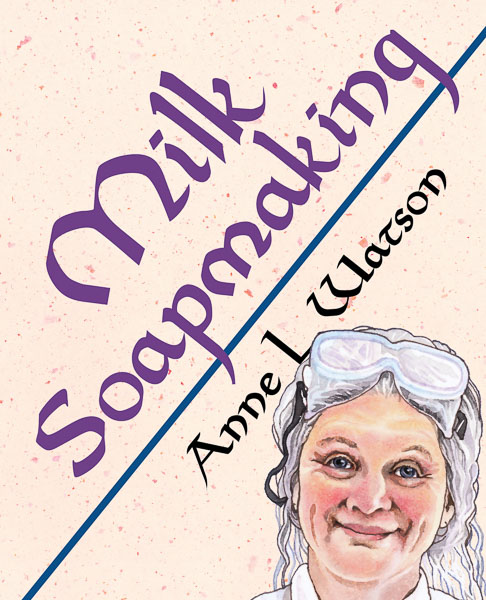
Book cover: Milk Soapmaking


Reviews and Comments

“Beautiful in its simplicity. . . . A definitive book for experienced as well as beginning milk soapers.”—Rebekah Bailey, The Original Soap Dish, South Whitley, Indiana

“An easy to read and understand book that will take the mystery out of milk-based soapmaking and debunk some of the myths surrounding it. It contains some great basic formulas to get you started making milk soaps of any kind, and fuel to let your imagination run wild when you are ready to formulate your own creations. A good source of information for new soapmakers, and also suitable for more experienced soapmakers who want to start making milk soaps but thought it would be too difficult.”—Amanda Guilfoyle, Bodelicious Bath & Body Products, Ipswich, Queensland, Australia

“As always, Anne is up to her usual excellence. This book demystifies milk soapmaking so everyone can have the luxury of a truly decadent bar of soap easily. LOVE this book!!!”—Susan Kennedy, Oregon Trail Soaps, Rogue River, Oregon

“Milk soaps are wonderful, and there’s so little guidance available. . . . It’s about time a good book came out.”—Carol Schatz, Dragon’s Pearls Naturals, Calera, Alabama

“If you have an interest in milk soaps, this is the book for you. . . . Debunks much of the popular wisdom that may have discouraged some soapmakers.”—Kevin M. Dunn, Author, Caveman Chemistry and Scientific Soapmaking (forthcoming)

“As uber-soapmaker Anne L. Watson demonstrates, milk soaps made properly are [rightfully] well-known for a quality of luxurious buttery softness that is undeniable. . . . Anne once again acquits herself ably as a scholar of the suds and a natural communicator.”—Wishing Willow (blog)

“Enthusiastically recommended.”—Midwest Book Review, Feb. 2009, “Reviewer’s Choice”


Contents

A Few First Thoughts
Myths and Milk
(Stories You Hear about Milk Soapmaking)
What Is Milk Soap, Anyway?
(What It Is and What Goes Into It)
What Do I Use to Make It?
(Gathering the Equipment You Need)
The Two Ways to Make Milk Soap
(And How to Choose Between Them)
Step-by-Step Milk Soapmaking
(From Prep to Cleanup and Beyond)
More Recipes!
(Different Milk Soaps You Can Try)
Making Soap with Plant Milks
(Vegans Do It Too!)
Getting Your Milk Soap in Shape
(How to Choose and Use a Mold)
Controlling Your Color
(How to Keep It Light)
Why? Why? Why?
(Frequently Asked Questions)
Resources on the Web


Sample Text

A Few First Thoughts

Since my book Smart Soapmaking was published, I’ve been asked again and again if it covers milk soapmaking. It doesn’t. Milk soapmaking is a subject unto itself. It uses different materials, of course, but besides that, it needs a different approach. Too much material to cram into one book, I felt.

Also, milk soaps weren’t my specialty at that time. I’d made a few, and they were fine soaps. In fact, several people who received bars of my whipping cream soap as gifts began to nag me to go back into the soap business. But I didn’t consider myself an expert.

Time changes things. As I started trying to answer questions from soapmakers about milk soap, I was drawn farther and farther into the subject. I learned about the different types of milk, what to expect from them, and how to handle each one.

I made hundreds of bars of soap from dozens of different recipes. I experimented with scent and color to see what happens when they’re used with milk. Then there were non-dairy milks to consider—would any of them make good soap? On a spreadsheet, I kept a log of my experiments—what went into each batch, and what came out.

When I got unexpected results, I asked materials vendors and chemists—what’s going on here? And they were kind enough to tell me, so a few more puzzle pieces snapped into place. Then I set up a testing program, giving and sending out soap sets identified only by number to testers who rated them for lather, feel, and general attractiveness.

In the end, I decided to write another book. Otherwise, I really would have had to go back into the soap business.


For more soapmaking,
visit Anne’s Soapmaking Page at
www.annelwatson.com/soapmaking